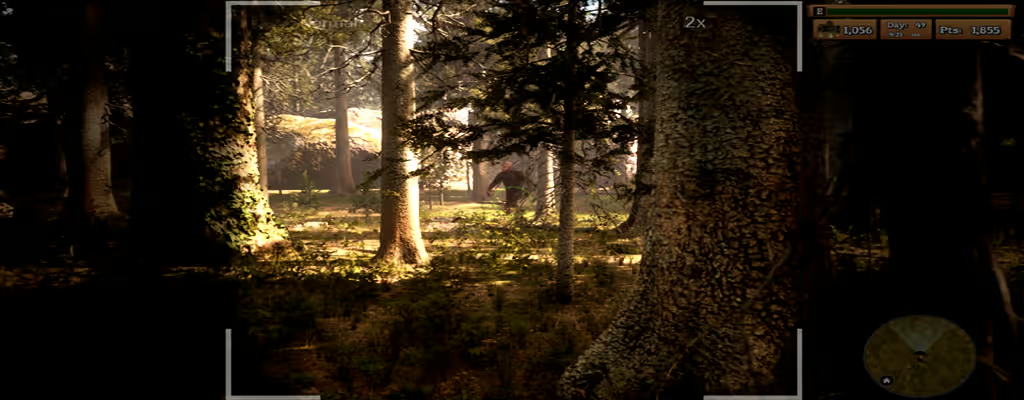
Why Does Finding One Hidden Object Sometimes Cascade Into Finding A Lot In Quick Succession?
It has happened to all of us. Let’s shed some light on why sometimes, finding one hidden object starts a streak of finding a lot all of a sudden.
The haunted house was really haunted until that one creepy teddy bear just refuses to be found. Timer’s ticking, you’ve got a few items chalked off the list but, you’re stuck at one. You’ve even started ignoring the ghosts around the creepy mansion, that’s how focused you are.
Then you spot it tucked behind a vase. Within the next thirty seconds, you've found a pocket watch, three buttons, and a suspiciously well-hidden umbrella. What happened? Did the game suddenly become easier, or did your brain finally decide to clock in for work?
As it turns out, psychology has some fascinating explanations for these sudden winning streaks.
Your brain gets better at knowing what to look for
One explanation involves something called perceptual priming. This is when the brain itself goes on a streak because it has the tendency to recognize something more easily after encountering similar visual information.
Let us give you an example. You were about to buy a car and suddenly, you start seeing that car on every turn, on every road. And no, it didn’t just start appearing out of nowhere, it’s just that your attention has simply become more sensitive to that particular car.
We carry a mental shopping list
Another interesting explanation comes from attentional templates, which are mental representations of whatever we're currently trying to find.
When you read “red ribbon” written in the list of items to be found, you visualize a red ribbon in your brain. More like a representation of what you’re trying to find. This happens to us all the time in real life as well. That template helps guide our eyes toward potentially relevant areas.
The trouble is that our expectations aren't always accurate. You can be imagining one thing but, in reality, it might look completely different. This is particularly useful in hidden objects games online, where developers enjoy making ordinary belongings look like they've entered a witness protection program.
Finding something changes our mood
There's also a psychological benefit to finally locating that stubborn missing object.
When playing these games, we often get really discouraged and frustrated when we cannot locate items. Confidence is down. Frustration is up. Now, once we locate one item all of a sudden, the confidence and interest go up instantly. You’re back in the game.
This is where the idea of cognitive momentum becomes useful. It’s not exactly the super power, of course not. It’s one of the reasons. It's similar to solving a crossword puzzle. One correct answer gives us a few letters, and suddenly several previously impossible clues begin making sense.
The trick is keeping that rhythm going
Of course, discovery streaks don't last forever. Eventually, we'll encounter another stubborn object that seems determined to remain invisible.
The fascinating thing is that finding one object doesn't magically reveal the others. It can sharpen our expectations, improve our familiarity with the scene, and restore our enthusiasm. And when everything finally clicks, there's something wonderfully satisfying about clearing half the list in a minute.
Even if the last missing item turns out to be a perfectly ordinary toothbrush hiding somewhere no sane person would ever keep one. That’s what free hidden object games are all about.
Related Articles