What Happens When Hidden Object Games Let Players Discover Objects Naturally?
Scroll through this article as we delve deep into the phenomena of what happens when HOGs let players discover objects naturally.
We've all had that one hidden object moment.
You're staring at the screen. You've checked every corner twice. You've zoomed in. You've zoomed back out. At this point you're about 90 percent convinced the game forgot to include the object altogether.
Then you spot it. Not because it suddenly appeared. Because your brain finally noticed what your eyes had been looking at all along.
That tiny moment is the entire reason hidden object games have survived for so many years. It's never really about clicking on a teacup or a feather. It's about that little spark of satisfaction when observation wins.
Lately, though, some games have started chasing that feeling in a different way. Instead of trying to hide objects in increasingly ridiculous places, they're making discovery feel...natural.
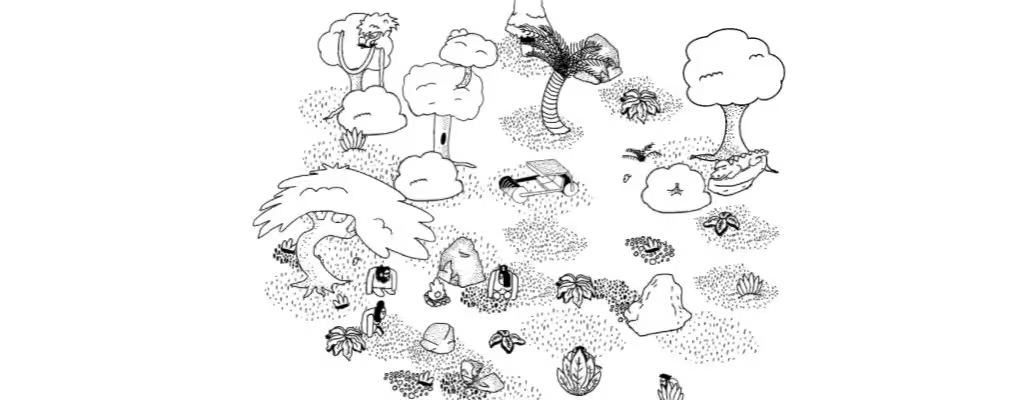
A good example is Hidden Fellas. What we usually see in hidden object games is a visual bomb. Full of colors, objects scattered, tiny details here and then tiny detail there.
Hidden Fellas is the opposite of that and it changes the concept cleanly and in a fun way.
We stop scanning and start exploring
If you’re thinking both terms make the same sense. They don’t.
Searching is hard work. Exploring is fun filled with curiosity.
Older hidden object games sometimes encouraged us to sweep the screen almost mechanically. Left to right. Top to bottom. Repeat until something moved.
Instead of treating every object as another item on a shopping list, we begin looking at the world itself. A group of characters might be fishing, arguing, building something, or simply wandering around. We start watching those little moments because they're entertaining, not because we're desperately hunting for the next clue.
Our brain likes solving, not guessing
Here's something puzzle designers have known forever. People enjoy feeling clever. People don't enjoy feeling tricked.
When an object is hidden logically, we usually smile after finding it.
When it's hidden unfairly, the reaction is very different.
Games built around natural discovery aim for the first response. They reward observation instead of luck, and that's a huge reason they're so satisfying to play.
The artwork finally gets its moment
Artists spend weeks creating these wonderfully detailed scenes filled with tiny jokes, little animations, and characters quietly getting on with their day.
Then we rush through them in ninety seconds. That seems a little unfair.
Games that slow the experience down encourage us to actually appreciate the places we're visiting. We notice funny background details. We watch characters interacting. We spot things that have absolutely nothing to do with the puzzle but somehow make the whole world feel alive.
Every scene starts telling a story
One thing Hidden Fellas gets right is that every location feels like something was happening long before we arrived.
The people aren't standing around waiting for us. They're busy.
They're cooking, working, chatting, exploring, or causing tiny bits of prehistoric chaos while we quietly wander through the scene looking for clues. That makes finding objects feel less like solving a worksheet and more like observing a miniature world that's happily carrying on without us.
That's probably where the genre is heading
The best free hidden object games aren't necessarily the ones that hide things the best.
They're the ones that make us want to keep looking. There's an important difference.
The idea is surely changing and, it’s being appreciated by the fans of this genre as well. Exploring is becoming fun for people who play these games because when the final object finally reveals itself, it doesn't feel like we've beaten the game. It feels like we simply learned how to see the world it was showing us all along.
Related Articles