How Exploration Could Make Hidden Object Games More Interesting
Video games in general rely on the activity of exploration or in more simple terms, discovering something new (and preferably unique). This creates interest in a game whether it be an adventure with rich and deep storytelling or even a simple arcade game with more challenging and unique levels to pursue. Regardless, moving forward and discovering is the essence of what makes a gamer keep on going through the game till (hopefully) the very end. Hidden Object Games are no exception to this, and the more a player discovers and progresses through the game, the higher the interest meter climbs.
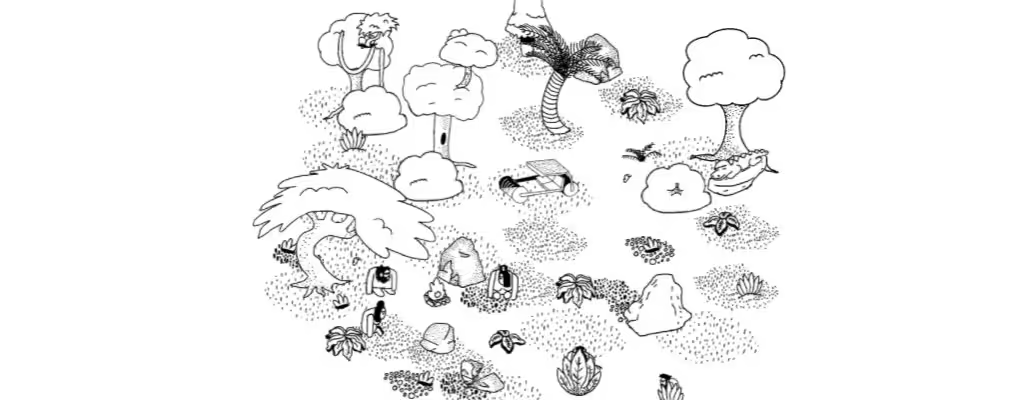
The thing about Hidden Object Games (HOGs), is that they are highly immersive and engaging. This is because they transform detailed, yet usually static art into an active, rewarding environmental mystery puzzle. With the use of pattern-recognition and analytical skills, a player is able to turn a cluttered scene into a treasure hunt in which ordinary objects are hidden in plain sight or blend seamlessly into shadows. Moving through this mechanically-driven exploration loop generates a satisfying focused gameplay enabling players to enter a relaxing state of psychological flow.
Generally, hidden objects games designers are masters at integrating the process of exploring, searching, puzzle-solving, and finding with intriguing narratives or environmental storytelling, thus keeping gamers hooked beyond the traditional “finding the needle in a haystack” routine of the Hidden Objects Genre.
The Need to Explore
If one has ever wondered why that little girl "Dora" has to keep exploring, it's because both curiosity and self-preservation work hand in hand to basically keep a person alive. In essence, it is good to know firsthand which is dangerous or benign. However, there are people like Dora or even the legendary sleuth "Nancy Drew", who have the natural tendency and the knack of shouting "Aha!" in the middle of the night. In terms of Hidden Object gaming, exploration is the primary engine that drives the core gameplay loop and the progress of the game's narrative.
Hidden Object Games rely on the players inquisitive propensities to discover items, solve puzzles, and unravel the core mystery or storyline, all done through the process of "finding out" or exploration. So, one has to actively move around the virtual world while searching through beautifully rendered rooms, eerie and mysterious landscapes, or clutters of antiques, equipment, things, and knick-knacks while pretending to be little "Detective Conan" or Sir Arthur Conan Doyle himself.
Exploration is a must because it immerses you in the game's environmental and situational narrative resulting in strong psychological incentives and satisfaction. hidden objects games online generally have a lot of things hidden all around, and the closer you look, the more you discover about the world around you, the characters, and the underlying mysteries that drives the game. The process of searching and finding provides a satisfying and rewarding state of cognitive flow. In essence, the game's reality and the environment acts as the antagonist you are trying to beat, and discovering its secrets is the only way to solve the overall puzzle.
Making Exploration More Interesting
Hidden Object Games have been around for quite a while, but they become a lot interesting when they transform the usually static, chaotic screens into dynamically visual and active puzzles that reward curiosity rather than just search, find, and click. Also, when the game requires more action from the player like opening drawers, peering behind paintings, or combining/using found objects to unlock secret compartments, it creates a thrilling sense of game control. A more interactive game introduces more into the gameplay, like backtracking and environmental problem-solving which practically elevates the game from a simple search to a complex, multi-location detective investigation that keeps players constantly immersed and focus.
What’s more, a game with a more deeply integrated exploration greatly enhances the environmental storytelling and atmosphere of the game, making the world feel more alive and worth investigating. Searching through clutter and finding essential objects and clues brings the progression closer and closer to the main goal of the game, as the more one investigates and explores, the more satisfying the game becomes, as everything from the lush or beautiful surroundings to the unanswered questions start to make more sense than ever. In the end, solving the game provides a satisfying and gratifying achievement brought about by a well-designed and deeply thought off exploratory path.
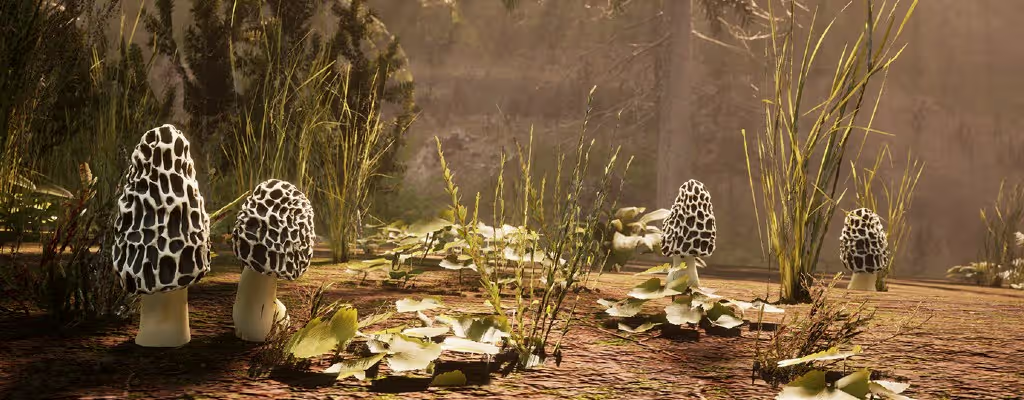
Mushrooms in A Forest
When it comes to exploration and finding things, “Morels: The Hunt” is still one of the best games that hugely enhances the traditional Hidden Object formula by shifting the puzzle-solving from a static, 2D cluttered and confusing location into a dynamic, 3D Open-World environment. As mushrooms are small and naturally blend into the forest floor, the game requires a deep and focused understanding of the environment with exploration that heavily demands attention to the natural topography of the land. These include checking near specific tree species, looking under open canopies, or backtracking to locations that you previously marked with a flag. This transforms casual wandering around into an active and rewarding puzzle-tracking activity where navigating the terrain is half the challenge.
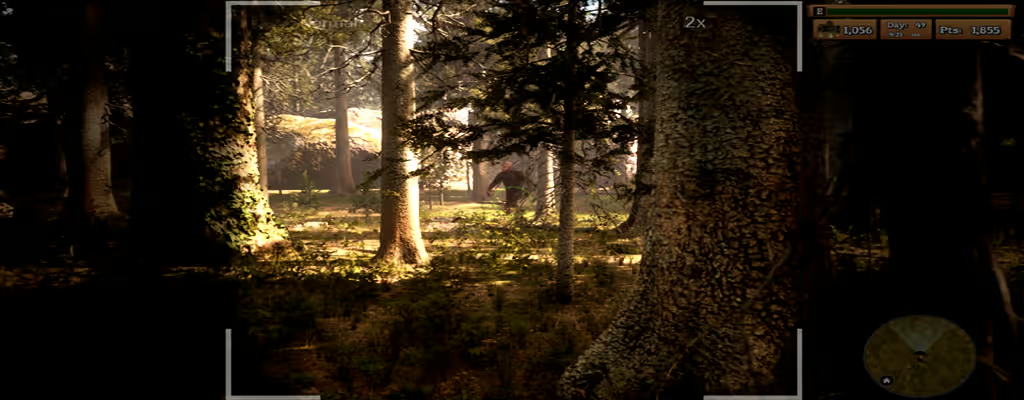
Also, in the game, the combination of exploration with “Wildlife Photography” and survival mechanics, ensures that scanning the environment never feels repetitive. As you explore the fields and forests tracking down elusive fungi (the Mushrooms), you are simultaneously listening for bird calls or tracking down rare animals species to photograph for extra points. These dual activity of searching for the Mushrooms and taking pictures adds much more to the discovery process. The dynamic environment of the game complicates things more with shifting weather patterns, day & night cycles, and location hazards like poison ivy, ticks, or even your friendly neighborhood Anaconda.
Finally, by tying game exploration to a progression system where points buy better equipment like headlamps for night hunting, raincoats for drizzles to heavy pouring, or even an ATV, the game makes every trek into the wilderness feel like a purposeful, and highly exploratory adventure.
Related Articles