How Better Search Mechanics Could Improve Hidden Object Games
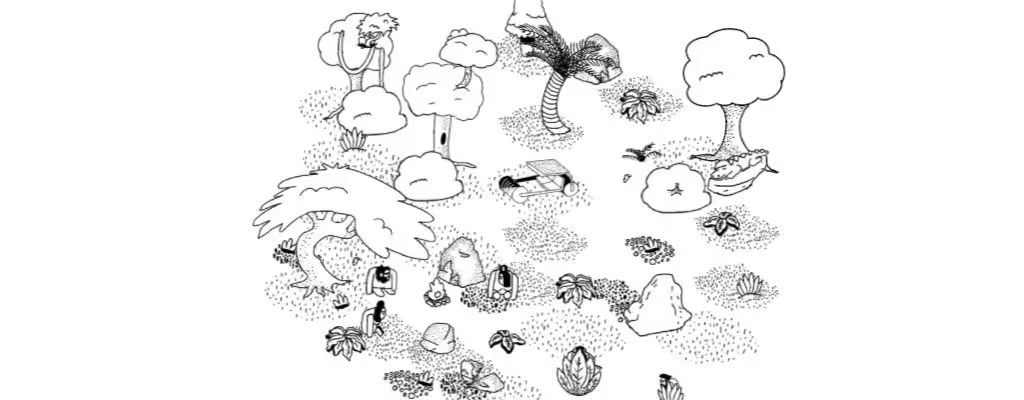
A major aspect of today's Hidden Object Games that makes them addictive and widely played is the game mechanic of hunting down well-concealed objects as well as those hiding in plain sight. This activity requires the use of one's evolutionary "hunter-gatherer instincts" that provides a distinct rush of dopamine every time a hidden item is successfully discovered. However, the generally static core gameplay which the genre has been successfully relying upon, has turned a bit stale or boring over the years as it lacks a certain dynamic "feel" that action and adventure games generally have. To this, let's take a look if adding a few alternatives to the basic gameplay will improve the genre's overall playability.
The Hidden Object Search Mechanic
Hidden object games have become popular and successful over the years as they provide a deep and satisfying low-stress cognitive experience that heavily rely on certain primal human psychological instincts. The action of intensely searching and successfully locating the hidden objects that have to be found result in an instinctive rush of dopamine which make the game more addictive to play. As the genre is built on a generally static slow-paced gameplay, these games offer a relaxed and meditative flow state where players can choose to immerse themselves at their own pace. The standard game controls are also easy to use as anyone who has played the traditional point-and-click adventures as well as genre newbies will quickly feel at home with the games.
At its core, Hidden Object and hidden objects free online games are also adventure games as they usually follow a narrative that takes place in an environment where the story-telling is taking shape. Game developers create beautiful locations composed of detailed-crafted artwork that reward visual curiosity as well as the puzzle and escape-room game mechanics that keeps the gameplay progressing while stimulating both intellectual and cognitive player abilities. By combining a structured task-oriented gameplay with deeply interesting themes and storylines, Hidden Object Games transform basic observation, item location, and retrieval into an engaging and rewarding experience.
Alternative Search and Find Games
There are other game genres that rely on the same Psychological principles that drive Hidden Object Games, after all, Hidden Object Games find their origins within these preceding Retro adventure and mystery games where the search-and-find game mechanics originally came from. Regardless, with the massive amount of alternative-oriented adventure-search-and-find games being released annually, the hybridization of various game mechanics may prove helpful to the current (long-standing) overall design of Hidden Object Games.
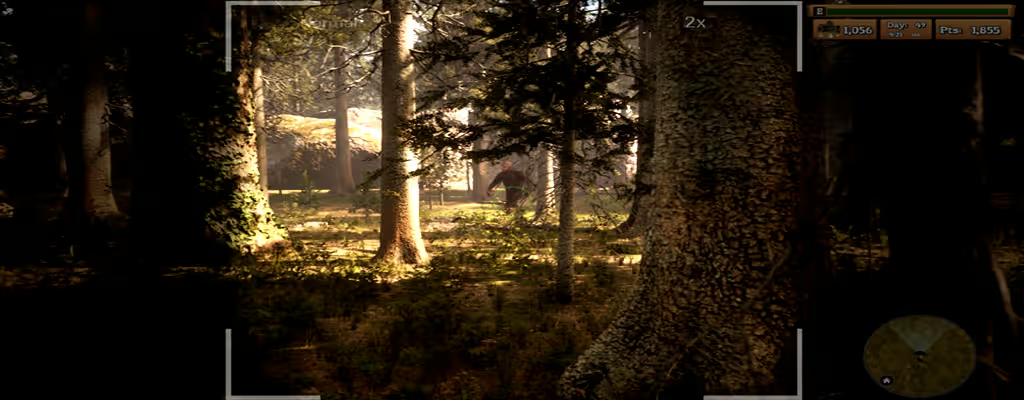
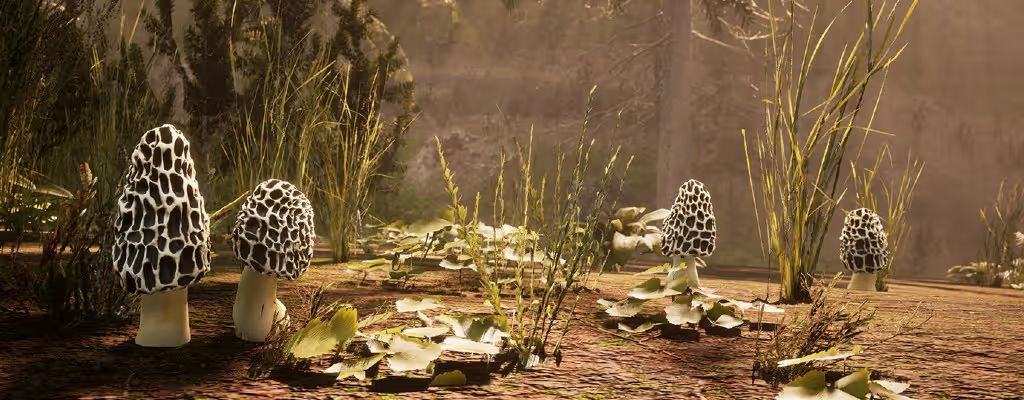
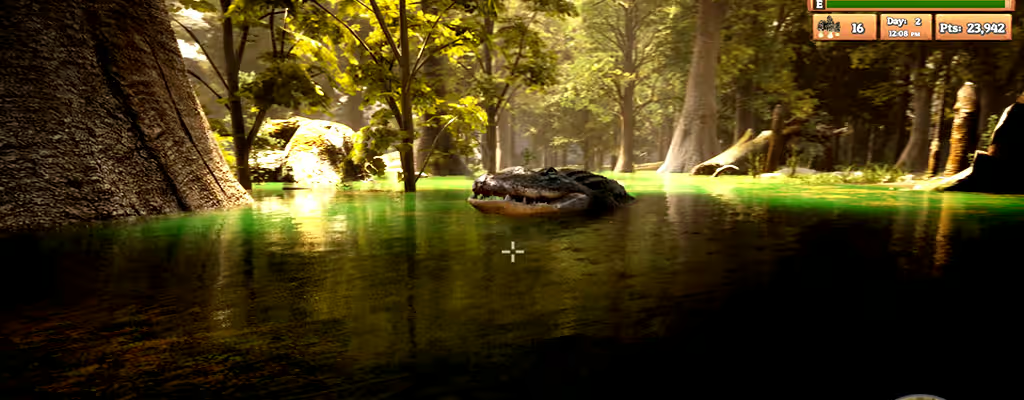
A good example would be the popular "Morel Mushroom" hunting game, officially known as Morels: The Hunt Series. The game requires players to hunt for edible or poisonous fungi while taking photos of wildlife and completing weekly collection tasks on various forests and other locations. Completing the assigned tasks earns the player points to level-up in both hunter and photographer ranks, and providing in-game currency to purchase gear like bug spray, raincoats, headlamps, and even vehicles. Unlike the traditional Hidden Object Games, the environments are realistic and full of life with weather, day and night, and energy and resource management.
Searching for the Morel Mushrooms is an adventure in itself that sort of combines a nature simulator with the Hidden Object Game mechanics where players find themselves in a dense 3D foliage environment where they have to carefully scan complex and visually cluttered surroundings to find tiny and naturally concealed items like mushrooms, hidden collectibles, and even rare mythological creatures. From the standpoint of traditional Hidden Object Games, it brings the 2D search and find checklist into an active 3D open-world version while making use of similar observational mechanics and rewarding the player with an identically satisfying dopamine rush when a hidden asset or mushroom is successfully discovered hiding in plain sight.
Adding Better, Hybrid, and Alternative game Mechanics to Hidden Object Gameplay
Based on the example of the Morel Mushroom search-and-find game, combining alternate and hybrid game mechanics to the generally static search-oriented gameplay of both hidden objects and hidden objects games online can transform the usual repetitive gameplay into a dynamically progressive cognitive, intellectual, and rewarding gaming experience. Integrating game mechanics like seasonal shifts, time-of-day progression, physical weather cycles, and a lot more, players are forced to adjust to changing surroundings instead of just memorizing a single static scene. This introduces what is known as “Fragmented Object Gaming” (FrOG), as well as other immersive manipulation activities where the player must utilize tools, remove obstacles, unlock doors, and other actions that can reveal hidden spaces and objects.
This enhances the traditional point-and-click mechanism into a much more rewarding gameplay replacing the frustrating issue of random clicking, and with a more logic-driven visual approach to problem solving. What’s more, theme and genre hybridization with games like narrative role-playing and detective/mystery simulations will expand not only the cognitive, but the emotional and intellectual depth of hidden object loops. What’s more, by embedding things like character or NPC interactions and story-line clues directly into the search activity, finding an item becomes an active plot-progression than just checking a word or item off a list.
By merging the traditional search-and-find Hidden Object Game mechanics with other aspects taken from other game genres (like searching through a 3D forest teaming with life), the sudden alternative changes can help players effectively fight boredom and fatigue and broaden the scope of Hidden Object Games to a more mainstream audiences, bridging the gap between casual puzzle solving and deep, immersive, adventure gaming.
Related Articles